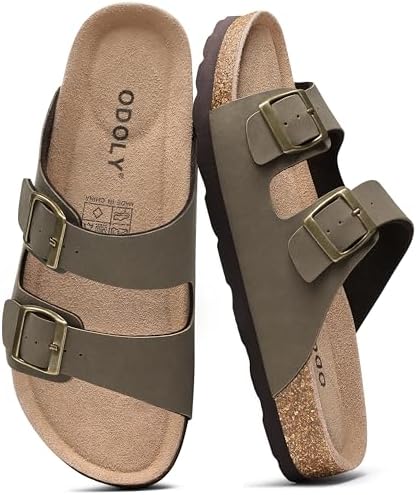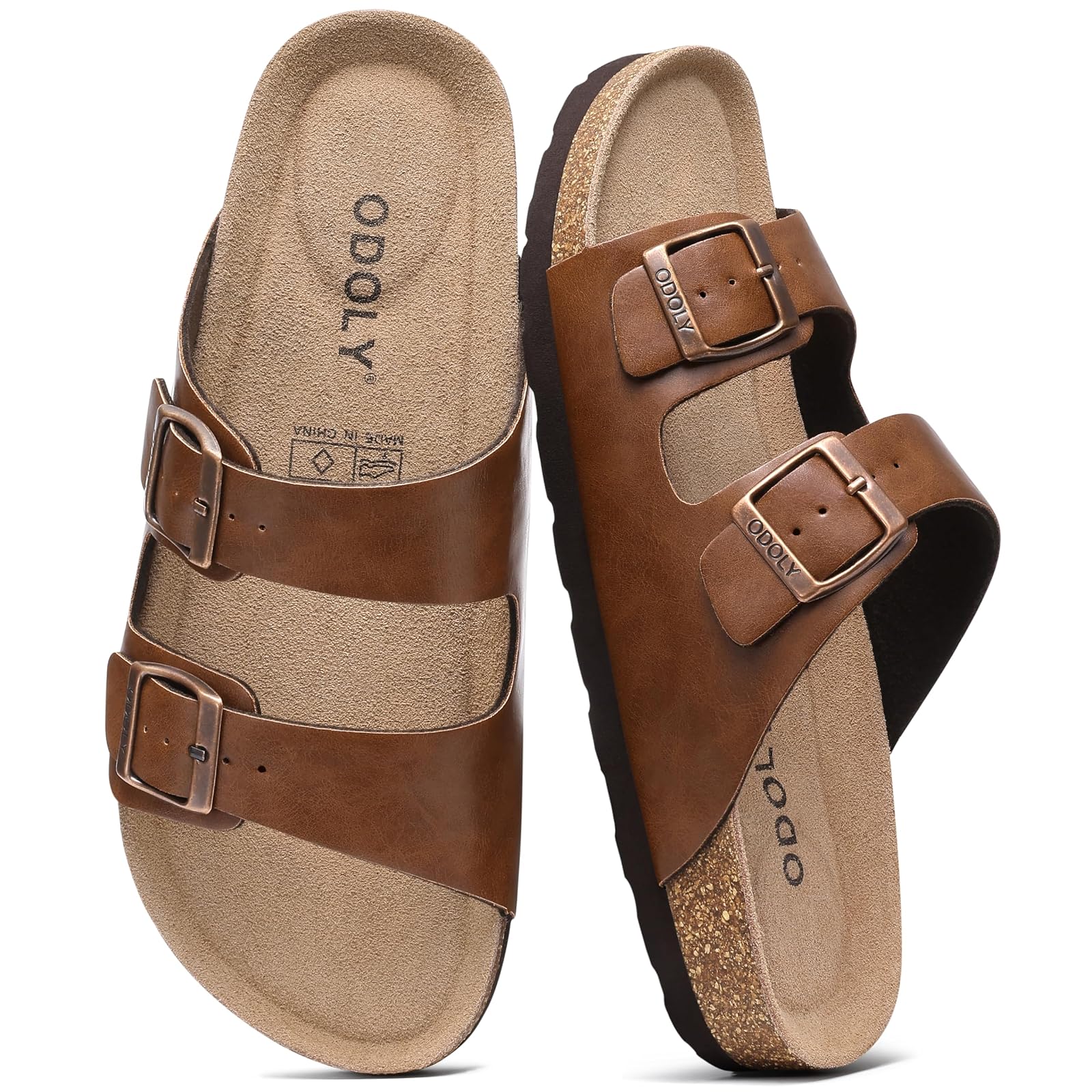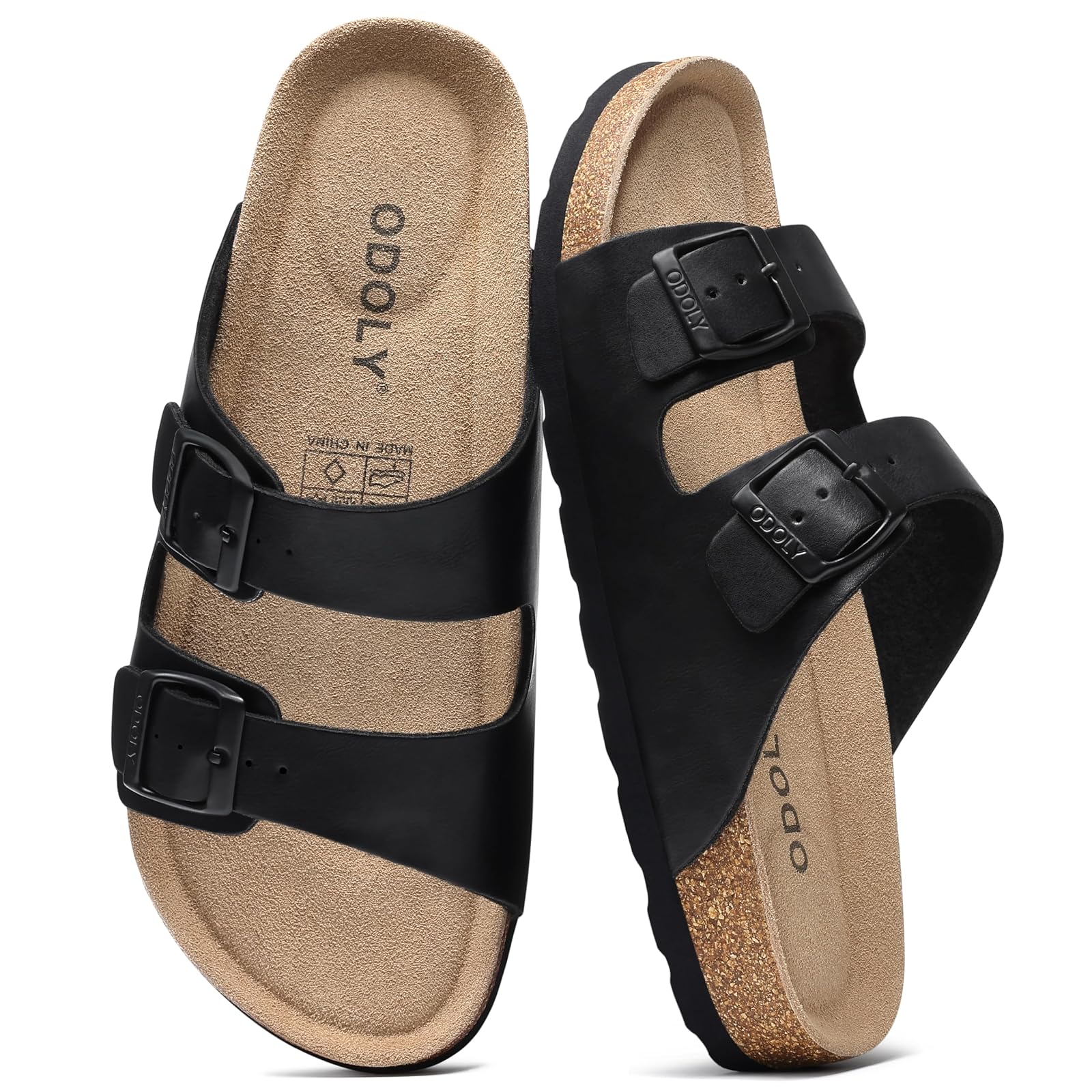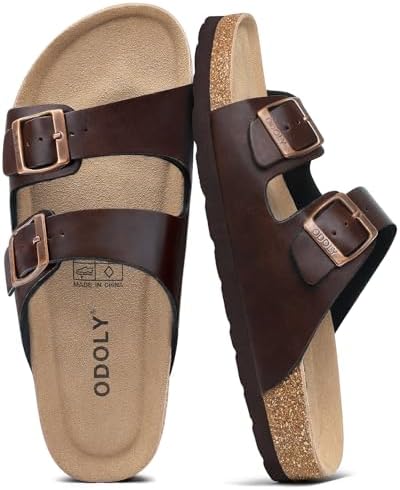
We lasted this open-toe slide on a wider men's cork footbed, fitting it with two adjustable straps in brown oiled material.
$29.99
★★★★☆ 4.3 (239)
A shoe takes its internal volume and width directly from the solid form we build it over. When we broaden that form, the footbed rim shifts outward and the upper pattern changes. The buckle settings then dictate how the leather holds the instep against our moulded cork footbed.
The last is the rigid shape around which we pull and secure the upper. It establishes the outline of the insole, the space across the ball, and the height over the instep. When we alter this form to create a broader profile, the footprint widens from the heel cup through to the toe box. Every line of the pattern follows this foundation. The volume is built into the shoe at the bench rather than formed after the fact. A wider base gives the foot direct contact with the flat floor of the cork footbed rather than crowding against the raised borders.
Wider forms demand adjusted upper patterns. The distance across the vamp increases, meaning the leather strap must span a greater distance from the lateral edge to the medial side. We punch additional holes along the strap so the prong catches at precise intervals. The rim of the cork footbed sits farther out, creating an open landing inside the shoe. If we kept a standard strap on a broader bed, the closure would run out of reach before finding purchase. The adjusted cut ensures the buckle hardware rests in an accessible position without digging into the side.
Our hardware uses a metal frame and a single prong that passes through punch holes in the upper. The adjustment comes entirely from moving this prong between the pre-cut holes. Leather does not stretch to accommodate a fit that the buckle cannot reach. Suede and nubuck remain stable along the line of the strap once secured. When you adjust the buckle, you change the physical perimeter of the upper. A proper setting holds the foot steady against the contoured cork without pulling the strap taut like a binding wire.
Look at the position of the prong when the shoe is on your foot. The prong should rest in a central punch hole, leaving spare holes on either side for future adjustment. The loose tongue of the strap should feed cleanly through the buckle frame without hanging over the edge of the sole. Check your placement within the moulded cork footbed. Your heel belongs fully inside the heel cup, and your forefoot must rest within the cork boundary rather than pressing over the cork rim.
A broader profile cannot compensate for an incorrect shoe length. If your toes touch the front boundary or your heel rides the back ridge, changing the width form will not solve the issue. Pulling a strap to the final punch hole indicates a mismatch in upper volume. When the buckle is cranked to its tightest hole, the leather bunches and pulls the footbed off its flat plane. The buckle exists to fine-tune the hold, not to correct an upper that does not match the foot.
The cork footbed works best when the foot rests level within the rim. Check that the buckle prong catches in a middle punch hole with free travel left in the strap. If the leather must be pulled to the final hole, the volume over the instep does not match.
Written at our bench. Every pair we mention is sold through our retail partner, who sets the price and handles payment, delivery and returns.
A broader last with more room across the tread, buckled or open over the top of the foot.
We lasted this open-toe slide on a wider men's cork footbed, fitting it with two adjustable straps in brown oiled material.
A wider-lasted slide in rich Oliver Brown, built with two broad straps across the instep and our shaped cork footbed.
An oiled slide in gold bronze, lasted wide for men with dual pronged buckles across the open upper and a deep cork footbed.
We lasted this mens open toe slide in matte black straps over a wide cork footbed with two pronged metal buckles.
Our workshop builds every shoe on one moulded cork footbed across the catalogue.
Every shoe we build begins with the same moulded cork footbed, but the first choice at the bench is the front of the upper.
A backless mule leaves the counter off entirely.
Answer four questions about the foot, the toe and the upper, and we will narrow the shelf down for you.
Find my pairBack to the shelves