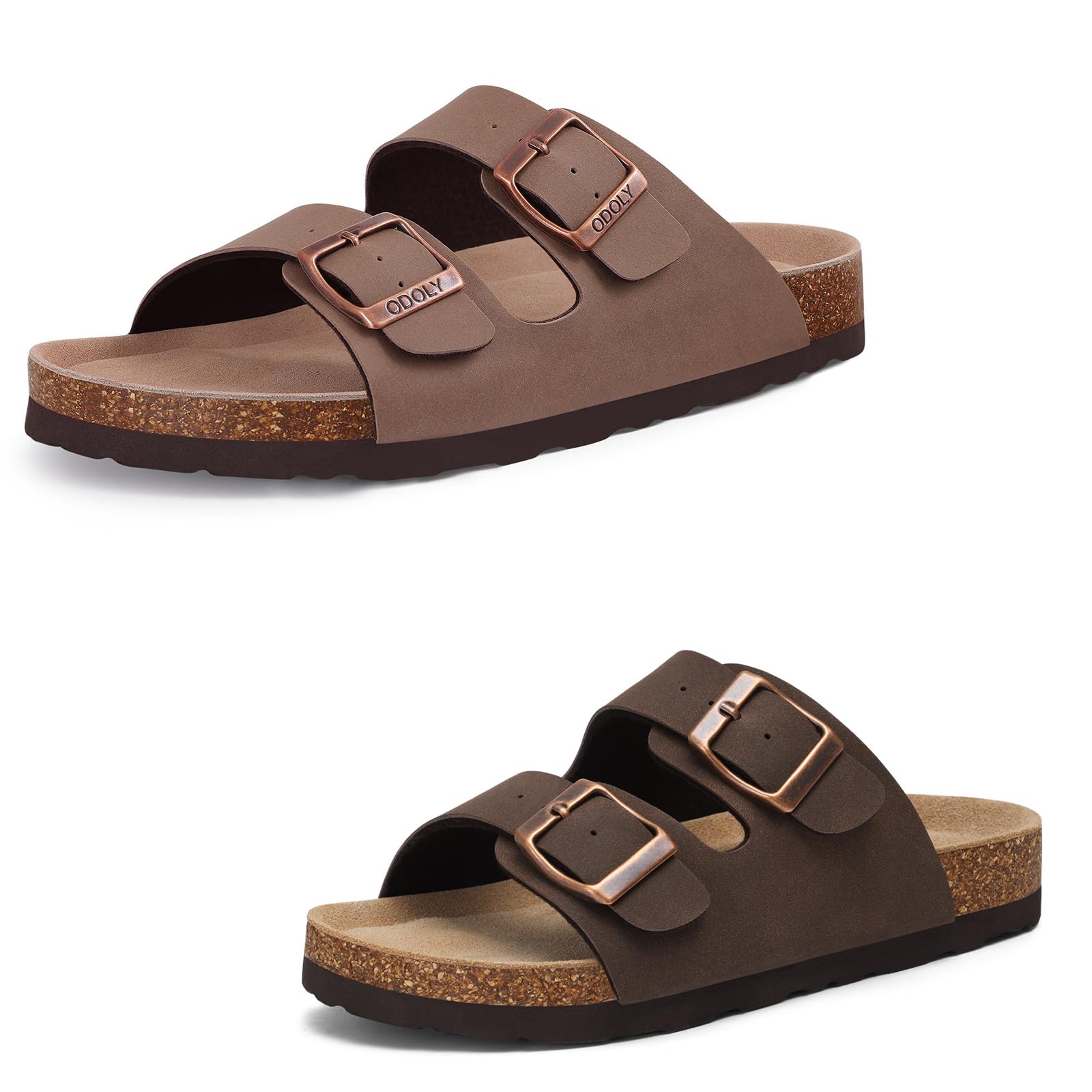
Smooth brown straps across the vamp fasten with twin buckles over a cork footbed shaped to wear in with every mile.
$19.99
★★★★★ 4.5 (9,486)
Every shoe we build begins with the same moulded cork footbed, but the first choice at the bench is the front of the upper. A closed vamp covers the toes, while an open strap leaves them bare. Here is how that construction choice works.
We build two distinct upper profiles over our cork footbed. A clog and a mule bring a solid front over the forefoot, closing the toe box entirely. A slide and a sandal strip that upper down to one or two straps across the instep. Our catalogue holds 38 pairs across 5 sections, built over 9 lasts. On the open side of the bench, we last 9 cork slide pairs. The difference is the surface area of the upper. One wraps the entire front of the foot in suede or nubuck, while the other leaves the toes open to the air and relies on buckle tension to hold the foot in the heel cup.
A closed front gives the shoe its own structure. When you take a clog off, the vamp stays upright and keeps its shape on the floor. That solid upper keeps dust and gravel away from your toes. It also provides a broad piece of suede or nubuck across the instep, distributing the hold of the shoe over the entire front of the foot instead of concentrating it along a narrow strap. The lining sits against your skin or a sock. Because the toe box is moulded with room for movement, the material does not press down against the top of your toes as you walk.
An open front changes how the shoe behaves when you step into it. With nothing covering the front of the footbed, a slide lets you step straight into the heel cup without using your hands. Air moves over the foot continuously. The upper relies on one strap or two across the instep to keep the cork sole attached to your foot. Each strap uses a buckle with punch holes to let you adjust the fit over your instep. You trade the broad coverage of a full vamp for direct airflow and the ease of stepping into an open footbed.
Every pattern choice involves a trade. A closed toe box requires volume so toes do not hit the front of the shoe. A narrow foot might find too much space inside a wide mule, allowing the foot to shift forward if the instep is low. On an open slide, the opposite problem exists. Without a toe box to stop forward motion, the single buckle and strap must carry the entire weight of the shoe. If you buckle the strap too loose, your foot slides over the rim. If you pull it too tight, the suede presses hard into the skin of your instep.
Look at the shoes sitting by your front door. If you reach for pairs you can step into without bending down, an open slide matches that habit. The open front dries quickly and lets air reach the skin during warm months. If your daily path takes you through dusty ground, a closed mule keeps the footbed cleaner. A closed upper also pairs naturally with heavy socks when the morning is cold, extending how long you can wear a cork footbed before winter sets in. The choice comes down to whether you need dust protection or open airflow.
Decide whether you want a full vamp over your toes or an open strap across your instep. Both styles share our moulded cork footbed, EVA outsole and deep heel cup. Pick the upper that matches how you step into your shoes each day.
Written at our bench. Every pair we mention is sold through our retail partner, who sets the price and handles payment, delivery and returns.
Open toe slides and slip on sandals on the same cork bed, held by one or two straps over the instep.
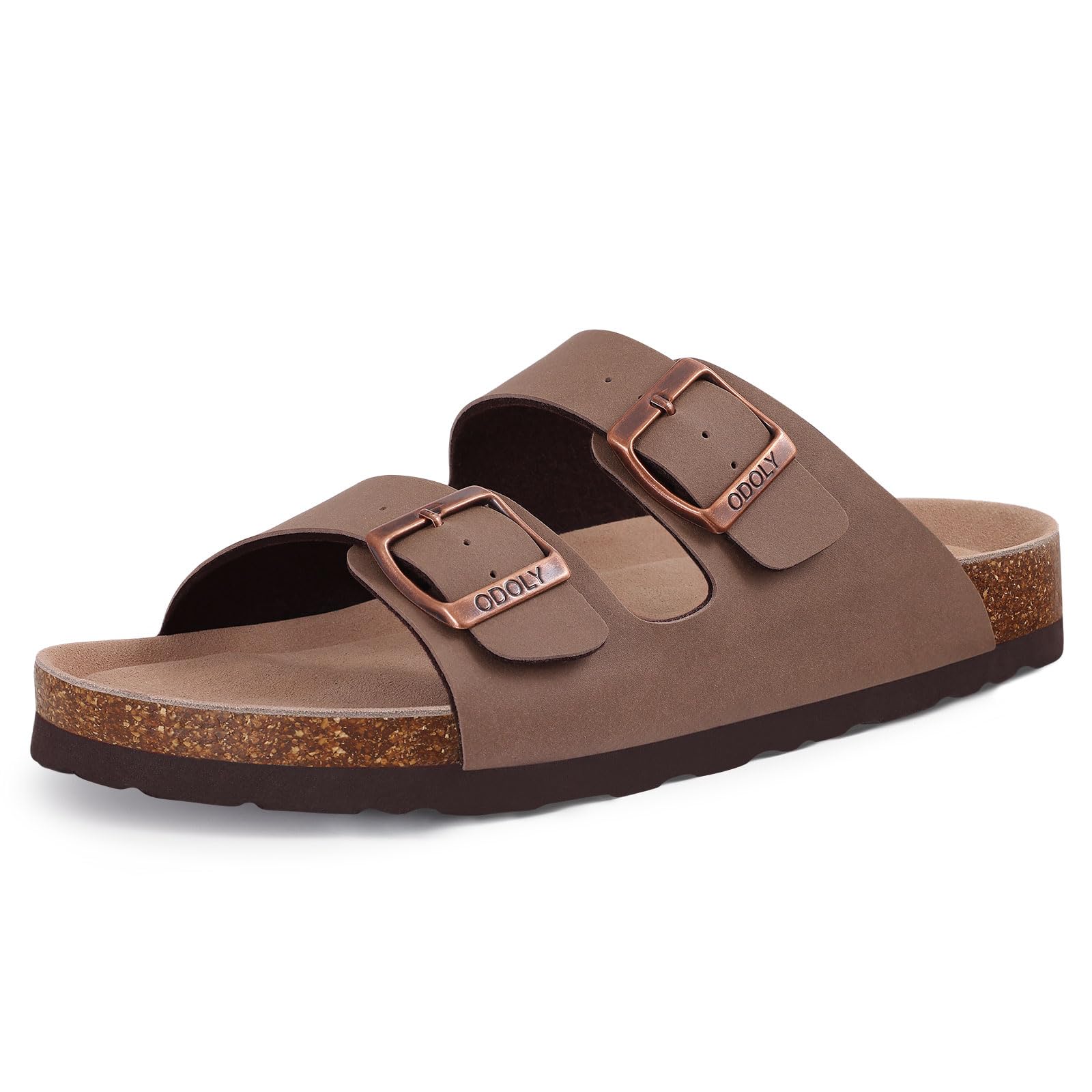
Smooth brown straps across the vamp fasten with twin buckles over a cork footbed shaped to wear in with every mile.
Two pairs of open toe slide sandals lasted on our cork footbed, with smooth straps and double metal buckles for daily wear.
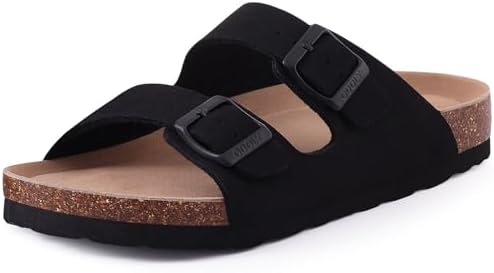
Black twin-strap slide sandals lasted on our contoured cork footbed with dual metal buckles and an open toe.
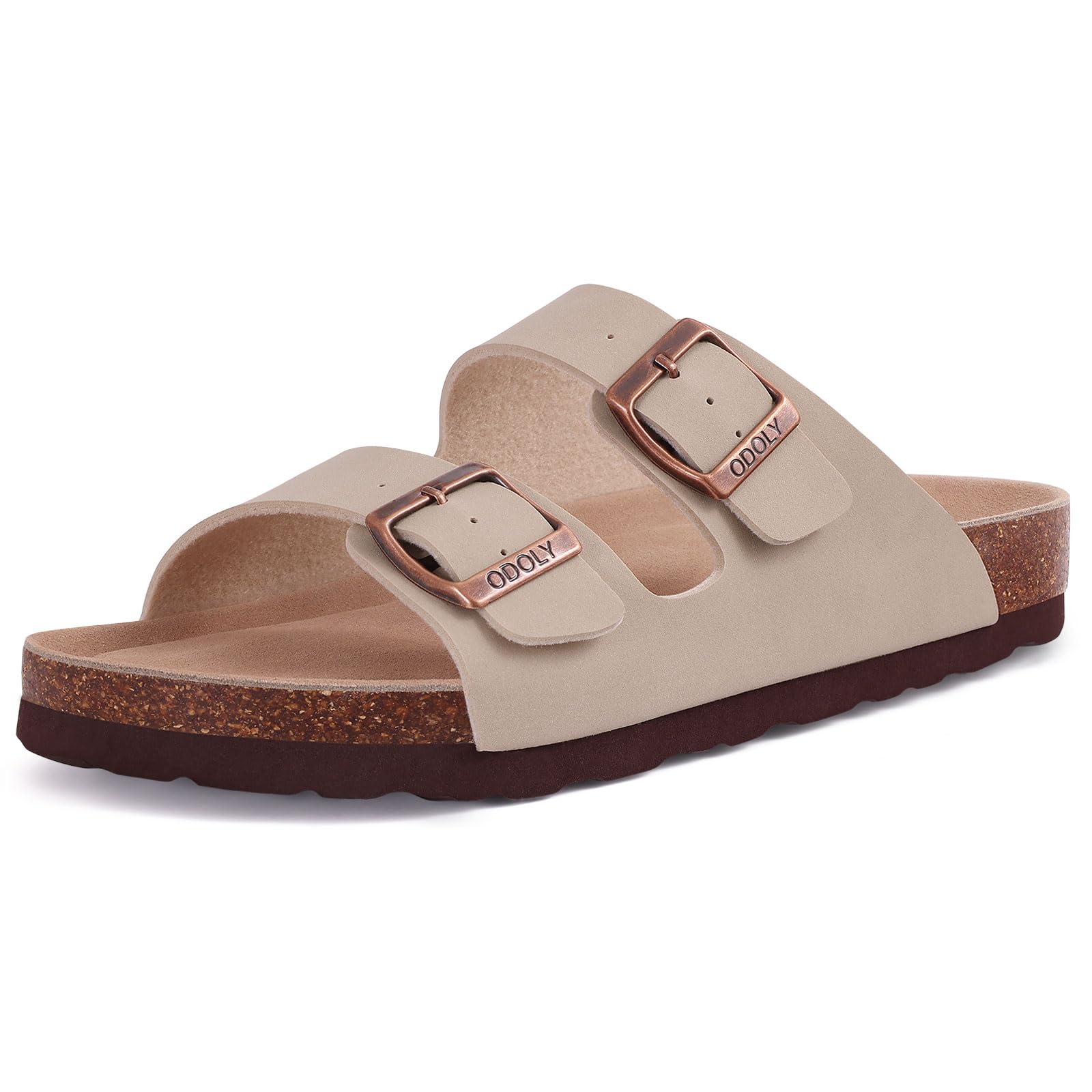
Two smooth stone straps over our shaped cork base, finished with an open toe and double roller pins.
Our workshop builds every shoe on one moulded cork footbed across the catalogue.
A shoe takes its internal volume and width directly from the solid form we build it over.
A backless mule leaves the counter off entirely.
Answer four questions about the foot, the toe and the upper, and we will narrow the shelf down for you.
Find my pairBack to the shelves