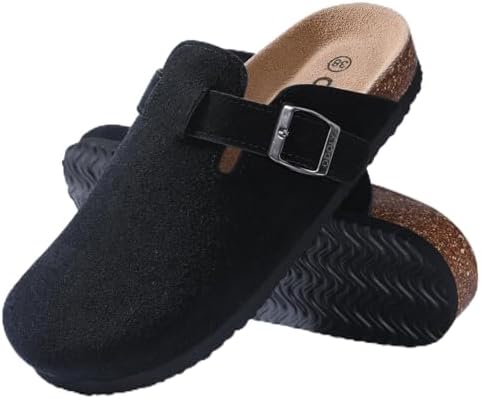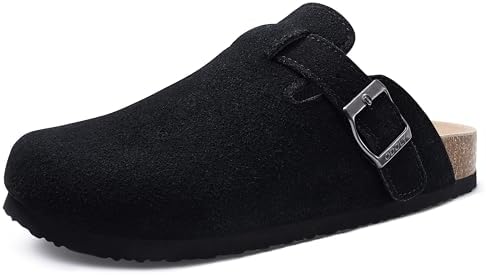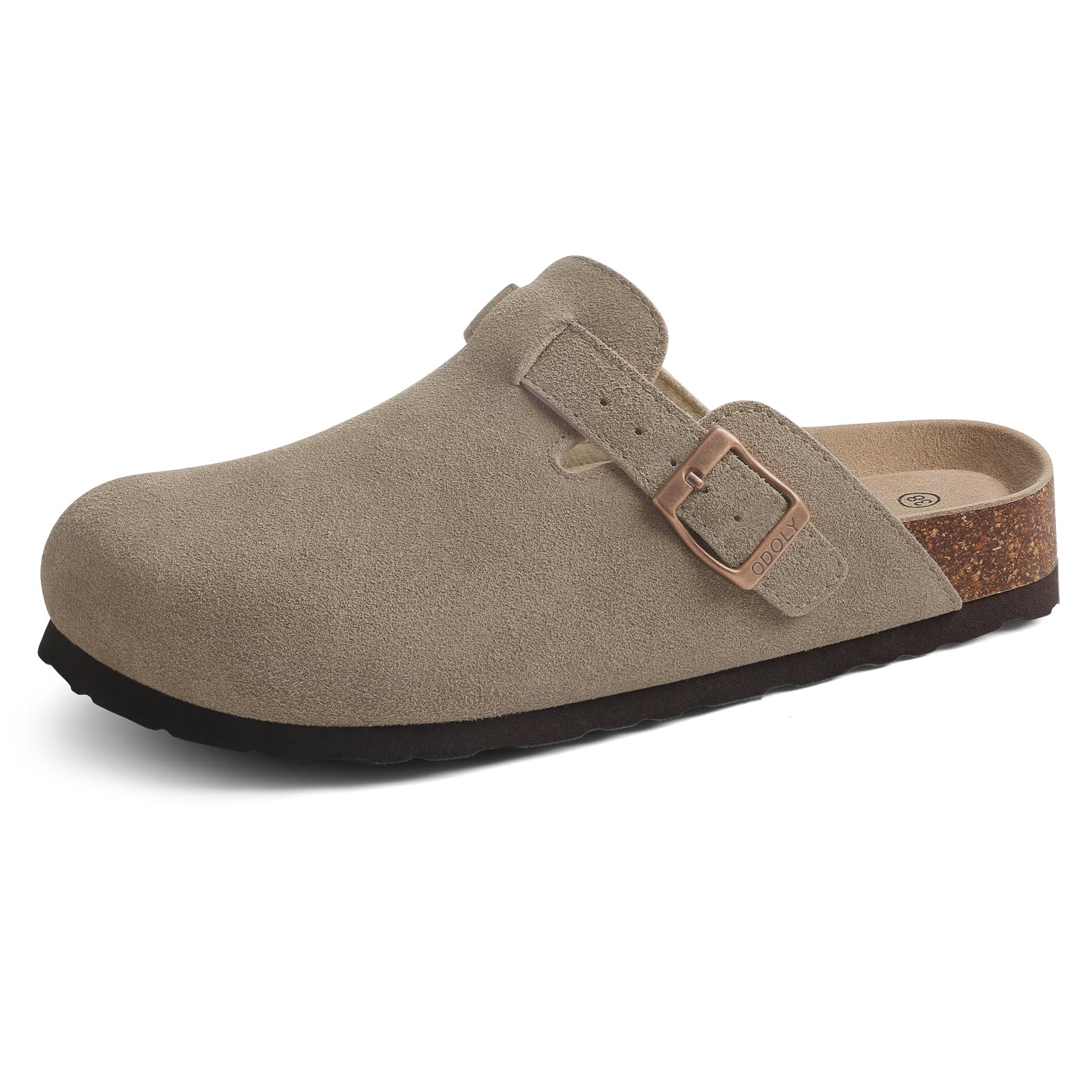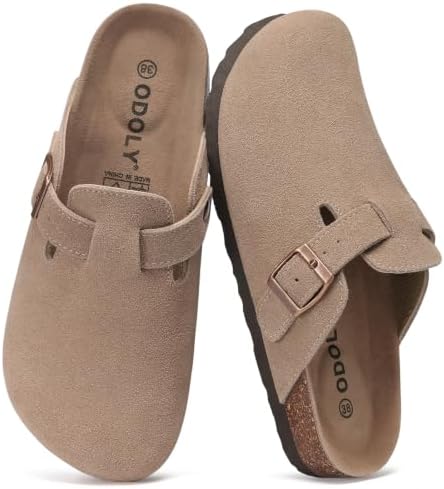
We last this closed toe clog in taupe suede over our contoured cork footbed with an adjustable metal buckle.
$46.99
★★★★★ 4.5 (3,767)
We build our footwear on a single moulded cork footbed across four distinct upper materials. Suede, smooth leather, oiled leather, and vegan panels react differently to dust, moisture, and wear. Learning how to clean the upper and dry the cork keeps each pair in working order for seasons of use.
Suede uppers have an open, raised nap. Water mats the fine fibers down and darkens the shade unevenly. Keep suede clean with a dry bristle brush instead of water or liquid soaps. Brush lightly along the grain of the vamp and straps to lift dirt out of the nap. If the fibers pack down after a season of wear, a brisk dry brushing brings the texture back up. Stains do not wipe off suede the way they do on smooth surfaces. Let wet mud dry completely before brushing it away. Keep liquids off the strap entirely.
Smooth leather uppers need only a damp cloth. Wipe gently along the length of each strap rather than scrubbing across the grain. Oiled leather behaves differently because the hide already carries oil through its thickness. Scuffs and scrapes on oiled leather uppers darken the surface instead of sitting on top. They blend into the strap as the leather flexes with daily wear. You do not need heavy waxes or polishes on these panels. A plain wipe clears off road dust without stripping away the natural oils built directly into the leather during the original tanning process.
Vegan uppers are non-porous and do not absorb moisture the way traditional animal hides do. Clean these panels with a soft, damp cloth across the toe box, vamp, and straps. Never apply leather oils, balms, or heavy conditioners to a vegan upper. These products cannot penetrate synthetic materials. They leave a greasy film on top of the strap that collects grit and dust over time. Plain water on a cloth lifts surface dirt without leaving any residue behind. Wipe the upper down, let it air out, and the material remains clean without extra steps.
Our footbed is moulded cork with a deep heel cup and built-in contour. Cork absorbs moisture from foot contact and shapes to your sole over time. Do not soak the footbed in water to clean it. If the cork gets wet from rain, let the pair dry at room temperature away from direct heat sources. Never place the footbed on a radiator or near an open vent. High heat dries out the natural binders in the cork midsole. That heat causes the edge of the rim to crumble and crack before its time.
Normal wear marks the footbed and softens the strap. That is expected as the materials break in. A pair reaches the end of its working life when the structural parts fail. Watch the strap around the punch hole where the metal prong sits under tension. If the material tears through at that hole, the buckle can no longer hold the foot securely. Look at the base of the footbed as well. Surface scuffs are fine, but a cork footbed cracked completely through from top to bottom means the foundation is broken.
Keep your cleaning routine simple and dry. Brush the suede dry, wipe the leather straps, and keep all cork footbeds away from radiators and hot car trunks. Sticking to plain water, soft cloths, and open-air drying preserves the uppers and the bed.
Written at our bench. Every pair we mention is sold through our retail partner, who sets the price and handles payment, delivery and returns.
Closed toe clogs and mules cut from brushed suede, buckled across the vamp and lasted over our moulded cork footbed.
We last this closed toe clog in taupe suede over our contoured cork footbed with an adjustable metal buckle.
Black suede lasted over a moulded cork footbed, closed at the toe and buckled over the instep.
Black suede closed toe clogs shaped over a natural cork footbed with an adjustable vamp buckle.
Dark grey suede cut over a round toe, lasted onto our moulded cork footbed with an antiqued metal buckle across the instep.
Our workshop builds every shoe on one moulded cork footbed across the catalogue.
Every shoe we build begins with the same moulded cork footbed, but the first choice at the bench is the front of the upper.
A shoe takes its internal volume and width directly from the solid form we build it over.
Answer four questions about the foot, the toe and the upper, and we will narrow the shelf down for you.
Find my pairBack to the shelves